 Weekend Reading
One Pouch of Beet Chews, Balanced Line by Line in a Saturday Ledger
SuperBeets Memory + Focus is a soft chew sold by GNC, thirty to a pouch. I put what it costs in one column and what its three studies measured in the other.

This is a paid advertisement. Sponsored by GNC Holdings, LLC (seller); Human Power of N (HumanN), maker.

Lowell Hatcher is the name this desk signs with, and the Saturday ledger in this story is a habit its writers have kept for a long time.
What this page says about the chew comes from the seller's listing, its ingredient panel, its return terms and the published studies, all read in September 2026.
Every Saturday, before the hardware store opens, I sit down with a green-ruled book and a pencil.
I've done it for about forty years, first for the shop and now just for the house.
It isn't complicated.
What went out goes on the left, what came in goes on the right, and at the bottom the two have to agree.
After that, I meet three friends for breakfast at the diner on Route 9.
Same booth, same waitress, same argument about the high school football team.

You probably have your own version of that booth.
A porch, a church hall, a bench outside the barber shop, a phone call with your brother every Sunday night.
And you probably know the small moment I'm about to describe.
Somebody mentions a fellow who used to coach Little League, and his name is right there, on the tip of your tongue, and it won't come.
Nobody at the table thinks anything of it.
Ten minutes later, halfway through the toast, it arrives on its own: Dale Kershaw.
The name always shows up eventually. It just keeps its own hours.
This spring one of the fellows in the booth slid a small red pouch across the table.
His daughter had bought it for him at the GNC at the mall, and the front said Memory + Focus.
"You're the numbers man," he said.
"Tell me if it's worth forty dollars."
So I did the only thing I know how to do with a question like that.
I took it home and entered it in the ledger.
One column for everything the pouch costs you, in dollars, in sugar and in mornings. One column for everything its three ingredients have actually been shown to do in a study, in whom, and at what amount.
This page is that entry, written out so you can check my arithmetic.
It isn't a verdict, and it isn't medical advice.
It's a bookkeeper's reading of a bag of chews.
By the end, you'll know what goes on each side and whether the two sides agree.
Forty Years of Saturday Mornings in Two Columns
I learned bookkeeping from a man named Ray who ran the feed store where I worked after the Army.
Ray had one rule, and he said it every Saturday: "If you can't say what it's for, it doesn't go in the book."

That rule has saved me more money than any coupon.
It works on a new roof, a new truck, a magazine subscription, and it works on anything that comes in a pouch.
Here's how the entry goes, and it's the same every time.
On the left side, the debit, I write everything the thing takes from me.
- The price, and the price per day, because a daily habit is really thirty purchases a month.
- The shipping, the tax and anything else that rides along.
- What it adds to my day that I didn't have before, like sugar or calories.
- The time it takes, and the time before I'd know anything.
On the right side, the credit, I write what I actually get.
Not what the bag says I get. What I can point to.
- What's in it, by weight, line by line.
- For each line, the best study I can find, and what that study measured.
- Who was in that study, how many, and for how long.
- Whether the amount in the bag matches the amount in the study.

At the bottom, I draw the double line only if the two columns agree.
If they don't, I leave it open and write a question in the margin.
That's all a ledger is.
It's a way of being honest with yourself on paper, before you're honest with your wallet.
The Small Slips a Saturday Collects
Let's start where the fellow in the booth started.
Not with the bag, but with the reason his daughter bought it.
What kind of slips are we talking about? The ordinary kind that everybody over fifty knows.
They're small, they're annoying, and most of them sort themselves out by lunch.

You walk into the hardware store for three things, and you come out with two and a bag of birdseed.
You walk into the kitchen and stand there, trying to remember what you came in for.
You read the same paragraph of the newspaper twice, because your mind wandered off to the gutter that needs cleaning.
You meet your neighbor's new wife, and her name is gone before she finishes shaking your hand.
Is that something to worry about? For most of us, no.
It's the everyday kind of forgetting that comes with a full head and a busy morning.
Your attention was somewhere else when the name went by.
Your brain filed the errand under "later" and then later came.
A slip is not a sentence. It's a Saturday with too many things in it.
I'm not going to tell you those moments are dangerous, because for most men they aren't.
And I'm not going to tell you a chew makes them disappear, because nothing on any shelf does that.
But I understand why they bother people.
They bother me, too, especially the names.
Names are the hardest thing to hold for almost everyone, young or old.
A name is a word with no meaning attached, and the brain likes things that mean something.
So why does a man buy something with "Memory" on the front? Because he'd like to feel sharper at the booth.
Because his daughter worries, and it's a way of telling her he's paying attention.
Those are good reasons to be interested.
They're not reasons to skip the arithmetic.
What We Already Do About Them, and Where It Stops
Before anything new goes on the ledger, I always look at what's already working.
Most of us have a system for the slips, even if we've never called it one.

Do lists work? They do, for the errand.
The folded paper in my shirt pocket gets me through the hardware store about nine times out of ten.
Do routines work? They do, for the keys and the glasses.
The keys go in the same bowl, and the glasses go on the same hook, and that's half the battle won.
Does a good night work? Better than anything in this article.
You already know how different the booth feels after eight hours of sleep versus five.
The same goes for plain water, a walk around the block and a plate that looks more like a garden than a vending machine.
Later on I'll put those on the ledger too, because they belong there, and they cost very little.
So where does it stop? It stops at the part you can't write on a list.
A list holds the errand, but it doesn't hold the name of the fellow who coached Little League.
And that's where a lot of men start looking at the shelf.
The shelf is long, and every bag on it has a word like "memory," "focus" or "brain" printed in big letters.
That's exactly the moment a ledger earns its keep.
A shelf full of promises is a place where you need to know what you're paying for.
Wanting a little help is reasonable. Paying for help that was never measured is not.
So let me show you how I read one bag.
You can use the same method on any bag on any shelf, and I hope you will.
How a Bookkeeper Reads Anything With a Price on It
Ray's rule has four questions behind it, and I ask all four of anything I'm about to pay for every month.
They're plain questions, and the answers are usually printed somewhere, if you know where to look.
First question: what exactly is in it? Not the picture on the front, but the panel on the back.
The panel is the one part of any package that has to list amounts.
Second question: what does each amount have behind it? One study, ten studies, or nothing at all.
And what did that study measure: a blood test, a scan or a memory test?
Third question: does the amount match? A study that used 200 milligrams tells you about 200 milligrams.
It doesn't automatically tell you about 150.
Fourth question: what does it cost me, all in? Dollars, yes, but also sugar, calories, mornings and the time before I'd know anything.
That fourth one is where most people stop counting too early.
Four questions. The panel answers the first, the studies answer the next two, and the receipt answers the last.
One more thing before we open the bag.
I read the studies myself, and I'll tell you the size of each one, because a study of ten people and a study of ten thousand aren't the same kind of entry.
When a study is small, I'll say so.
When the amount in the bag is smaller than the amount in the study, I'll say that too.
The Pouch From the Mall, and the Words on Its Front
The pouch my friend slid across the table is called SuperBeets Memory + Focus.
It's made for a Texas company called HumanN, and it's sold by GNC, the vitamin store you've walked past in every mall in America.
You may know the SuperBeets name from television.
The original is a beet powder you stir into water, and this is a different product: a soft chew you eat straight out of the bag.
What does the front of the pouch say? It says "Memory + Focus" in large letters, and it says "Blueberry Pomegranate."
It also says "Decaffeinated," which surprised me until I read the back.
Here's the first thing a bookkeeper notices.
"Memory + Focus" is the product's name, not a result.
A name is what the maker decided to call it.
It goes in the book as a name, and it doesn't go in the credit column at all.
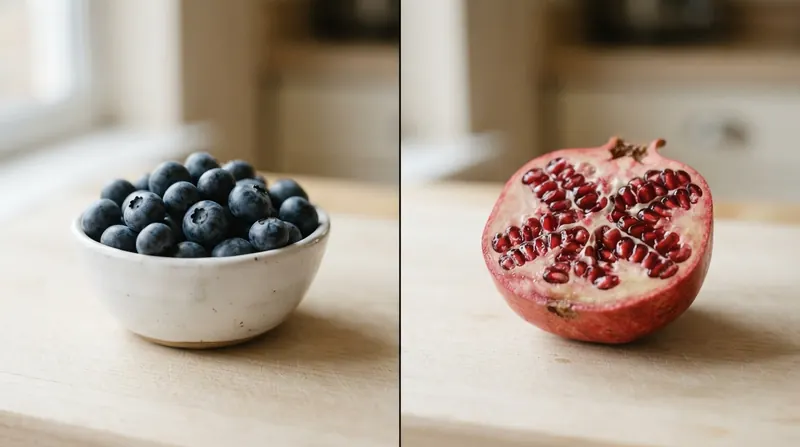
The second thing is the fruit.
The front shows blueberry and pomegranate, and neither one is among the three named ingredients on the panel.
They're the flavor.
The panel lists flavorings among the other ingredients, which is the maker's own way of saying the fruit taste is added.
Is there anything to blueberries, though? There's a small study worth knowing about.
Twenty-six healthy older adults, averaging 68, took a daily blueberry concentrate for twelve weeks. [1]
The blueberry group showed more blood reaching the brain on a scan, and a borderline improvement on a working-memory task.
That concentrate delivered 387 milligrams of the blueberry's color compounds a day, which takes a great many blueberries.
Does any of that carry over to this chew? No.
There's no blueberry line on the panel and no amount printed for any of those compounds, so it can't go in the credit column.
If blueberries are what you're after, the grocery store sells them by the pint.
The Debit Column: What One Pouch Costs You
Now the left side of the page.
This is the column most articles about supplements skip, and it's the one I trust most.
What does it cost in dollars? The seller's list price when I read it was $39.99 for a pouch of thirty chews.
That's about $1.33 a chew, or about $1.33 a day, since the label says one chew daily.
The seller often runs a promotion, and the day I read the listing it was taking a percentage off in the cart.
So your price may be lower, and it may change from week to week.
What about shipping? One pouch doesn't reach the seller's $59 line for shipping at no charge.
Standard shipping on one pouch was $12.99, and it takes two to five business days, or you can pick it up at a store.
So if you order one pouch by itself and have it shipped, your first month runs closer to $53 than to $40.
That's the kind of number I like to see before I order, not after.
A daily habit is really thirty purchases a month. Count it that way.
What does it cost in sugar? Two grams of added sugar per chew, from tapioca syrup and raw cane sugar.
There's also a little stevia extract in there to round out the sweetness.
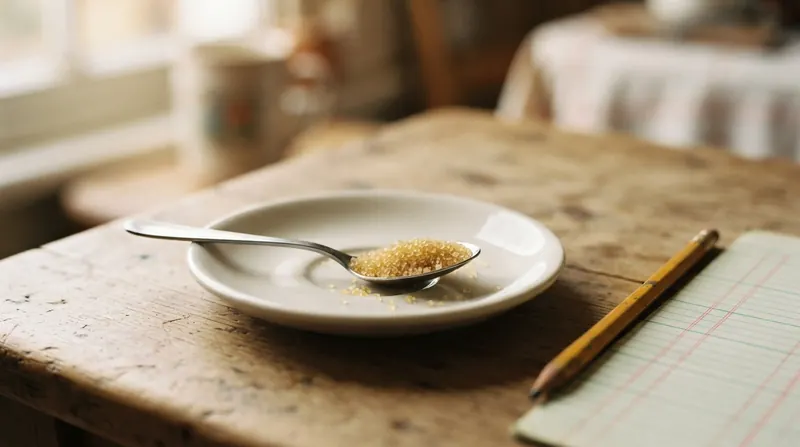
Two grams is about half a teaspoon.
Across a pouch, that's sixty grams, or roughly fifteen teaspoons spread over a month.
Is that a lot? It's a small fraction of a can of soda.
But it's still sugar you didn't have yesterday, every single morning, and it goes in the book.
What does it cost in calories? Twenty calories a chew, with four grams of carbohydrate.
That's about the same as a couple of crackers.
What does it cost in time? One chew takes a minute to eat, with no water needed.
The bigger cost of time is the waiting, and we'll come to that when we get to the studies.
Anything else on the debit side? One thing, and it's worth a line of its own.
If you take anything daily for the heart and circulation, or anything that affects clotting, show the pouch to your pharmacist before the first chew.
I'll explain why when we get to two of the ingredients.
For now, just write it in the margin: pharmacist first.
The Back of the Pouch, Copied Into the Book
Now turn the pouch over, the way you'd turn over a bill before you pay it.
The back is where the real entry starts.
How much is in one chew? The panel names exactly three ingredients, and it gives a weight for every one of them.
I copied them into the book the way I'd copy three lines off an invoice.
- Beet root powder: 300 milligrams.
- Verti-te resveratrol, a grape-derived form: 150 milligrams.
- Coffee fruit extract, from the red fruit around the coffee bean: 100 milligrams.
That adds up to 550 milligrams of named ingredients per chew.
Everything else in the chew is what turns those three powders into something you can chew.
What's in the rest? Tapioca syrup, raw cane sugar, rice bran, flavorings, sunflower lecithin, sunflower oil, malic acid, glycerin, citric acid and stevia extract.
In plain words, it's a small fruit-flavored chew built around three powders.
I'll give the maker credit for one thing right away.
Every named ingredient has a weight printed next to it.
That sounds like the least you could ask.
But a lot of bags on that same shelf hide their amounts inside a "blend" with one total weight, so you can't tell whether a line is a spoonful or a speck.
With this panel, you can do the arithmetic.
That's the first honest thing about it, and it goes in the book.
What does "Decaffeinated" on the front mean, then? It refers to the coffee fruit extract.
The panel doesn't print a caffeine figure, so I can't give you a number from the label.
My advice is simple: keep your coffee exactly where it is.
If you change two things at once, you'll never know which one you're feeling.
Who's behind it? Two companies, and the pouch names both.
HumanN of Austin, Texas is the maker, and GNC of Pittsburgh, Pennsylvania is the seller.
The seller publishes a phone number, 1-877-462-4700, and a customer service address in Pittsburgh.
I like a company I can call on a Saturday, and GNC's lines are open that day.
The Debit Column, Totaled
Before I turn the page to the credit side, let me total up the left column.
This is the part of the entry I'd read out loud to my friend in the booth.
- About $40 at list price for thirty days, or about $1.33 a day, before any promotion.
- About $13 more for shipping if you order one pouch by itself.
- Two grams of added sugar and 20 calories every morning, sixty grams of sugar a month.
- One minute a day to eat it, and no water needed.
- One question for the pharmacist before you start.
- A month at least before you know whether you like the habit.
Is that a lot or a little? That depends on your own book.
For some men, $40 a month is a tank of gas, and for others it's a week of groceries.
What I will say is that it's a known, set number.
You can see it before you buy, and that counts for something.
Now the right side of the page, where the chew has to earn its forty dollars.
The credit column is harder to fill in.
Anyone can read a price, but reading a study takes a little patience.
I'll take the three ingredients one at a time, smallest study first.
For each one, I'll tell you what the study measured, who was in it, and whether the amount in the chew matches.
And I'll be plain about what each study does not tell you.
That's the part of a ledger most people skip, and it's usually where the money goes.
If you've been following along, here's where the pouch goes on the table.
It's time to look at the thing itself.
That's the whole entry on one card.
It's a small daily habit, with three weighed ingredients and a price you can see.
Now let's find out what each of those three lines has behind it.
We'll start with the smallest study and work our way up.
Credit Line One: Coffee Fruit, 100 Milligrams
What is coffee fruit? It's the red fruit that grows around the coffee bean.
The bean is the seed, and the fruit is the part most coffee farms have always thrown away.
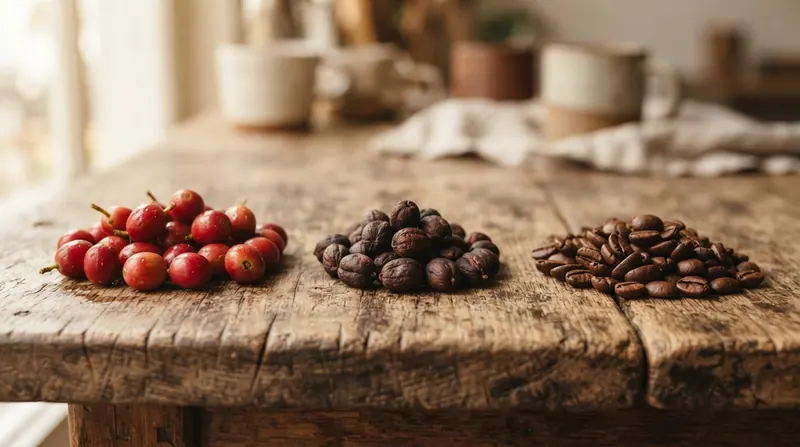
Somebody figured out a while back that the fruit might be worth something on its own.
Now it's dried, extracted and sold as an ingredient, and this chew carries 100 milligrams of it.
What does the study say? This is the smallest study of the three, and I want you to see just how small.
Healthy adults took a single 100-milligram dose of a whole coffee fruit concentrate, with ten people in each group. [2]
Over the next two hours, researchers measured a protein in their blood that brain cells use to grow and connect.
In the coffee fruit group, that protein rose by about 143 percent from where it started, against about 31 percent for the comparison groups. [2]

So what goes in the credit column? Here's the honest line.
The amount matches: the chew holds 100 milligrams, the same as the study.
That's rare, and I want to give it its due.
Plenty of products carry a sprinkle of an ingredient and point to a study that used ten times as much.
But look at what was measured.
It was a blood test, over two hours, after one dose.
Nobody's memory was tested.
Nobody took it for a month, and the authors themselves said larger studies were needed. [2]
What does a blood marker tell you? It tells you something happened in the blood that afternoon.
It doesn't tell you whether you'll remember Dale Kershaw's name on Saturday.
Right amount and a tiny study: a blood test, not a memory test.
So in the book it reads like this.
Coffee fruit, 100 milligrams, matches its study exactly, and the study was ten people per group and a blood test.
I'd call that an early entry.
It's worth writing down, and it's far from a finished account.
Why a Small Study Still Belongs in the Book
You might wonder why I bother writing down a study that small.
Here's why, and it's the same reason I keep receipts for small purchases.
Small studies are how every larger study starts.
Somebody sees a signal in ten people, and it earns a look in a hundred, and eventually maybe a thousand.
So is a small study worthless? Not at all.
It's just early, and an early entry should be labeled as early.
What bothers me in advertising is when a small study gets dressed up as a big one.
The bag doesn't do that, to its credit, because the bag doesn't cite any study at all.
All the seller prints is the product's name and the standard statement about the Food and Drug Administration.
Everything I'm telling you about the studies, I went and found myself.
A small study is a first entry, not a final balance.
Keep that idea in mind as we go.
The next two lines each have their own study, and each one is a different size.
Credit Line Two: Beet Root, 300 Milligrams
Why beets? Beets are rich in something called dietary nitrate.
The body turns nitrate into a compound that helps widen blood vessels, which is why beet juice became popular with runners and cyclists.
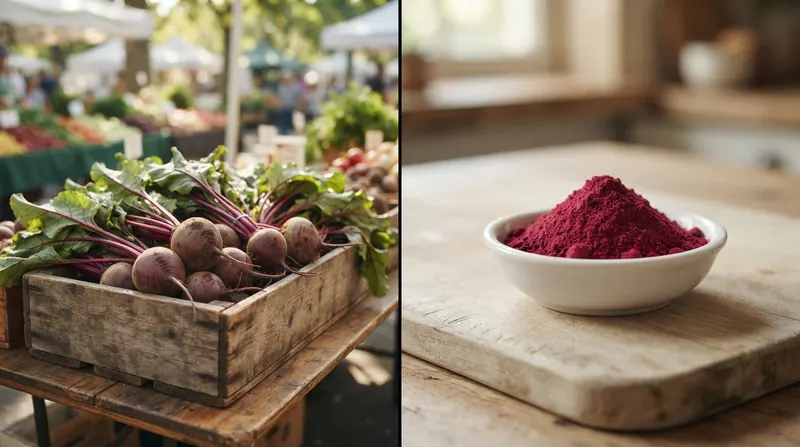
The SuperBeets name comes from exactly that idea.
The original product is a beet powder you mix into water, and this chew carries a smaller amount: 300 milligrams of beet root powder.
What does the study say? It's a small study of older adults, average age about 75.
They ate a single day of a diet rich in nitrate, and that day included beet juice. [3]
The next morning, researchers scanned their brains to look at blood flow.
Overall blood flow to the brain did not change, but blood flow in one frontal region was higher. [3]

So what goes in the credit column? This one needs two lines in the book.
First, the study didn't test memory at all; it measured blood flow on a scan.
Second, the amounts don't match.
The study used a whole day of nitrate-rich food and a glass of beet juice, and the chew holds 300 milligrams of powder.
How big is 300 milligrams of beet powder? About the weight of a few grains of rice.
A glass of beet juice carries many times more nitrate than that.
A whole day of beets and juice, against a few hundred milligrams of powder. The book has to show the difference.
None of this makes beets a bad idea.
Beets are a good vegetable, and a day of them did something measurable on a scan in people in their seventies. [3]
It just means the chew and the study are two different entries.
One is a day at the table, and the other is a powder inside a soft square.
Anything to watch for? Two things, both from the maker's own world of beet products.
Beets can turn urine or stool pink or red for a day, which is harmless but startles people.
And because beet powder is sold for its nitrate, which widens blood vessels, this is one of the reasons for the note in the margin.
If you take anything daily for the heart and circulation, the pharmacist should see the pouch first.
Credit Line Three: Resveratrol, 150 Milligrams
What is resveratrol? It's a compound that grapes make, mostly in their skins.
You'll find small amounts of it in red grapes, in some berries and in peanuts.

It became famous in the 1990s, when people were trying to explain why the French ate so much butter and seemed to do fine.
The chew uses a branded, grape-derived form called Verti-te, at 150 milligrams.
What does the study say? This is the one line on the panel with a real memory result behind it, so let's go slowly.
Forty-six healthy adults aged 50 to 75 took either 200 milligrams of resveratrol a day or a placebo, for twenty-six weeks. [4]
At the end, the resveratrol group held on to more words after a thirty-minute delay than the placebo group.
Their scans also showed stronger connections in the hippocampus, a part of the brain closely tied to memory. [4]

Now, that's a real entry, isn't it? It is, and it's the strongest line in the credit column.
Twenty-six weeks is half a year, and a word-list test is exactly the kind of thing a man at the booth cares about.
But a bookkeeper reads every line of the invoice, not just the total.
And there are three details in this one.
First, the amount. The study used 200 milligrams a day, and the chew holds 150.
That's three quarters of the study's amount.
Second, the people. Every one of the forty-six in that study was overweight.
That doesn't mean it can't apply to anyone else, but it means we don't know from this study alone.
Third, the length. The study ran twenty-six weeks, and a pouch lasts thirty days.
To match the study's calendar, you'd need about six pouches, and six pouches cost about six times as much.
The best line in the book, at three quarters of the amount, in a narrower group, over six times as long as one pouch.
Is there any other grape study I should know about? There are two, and I want to be careful here.
A standardized whole-grape extract at 250 milligrams a day did better than placebo on thinking tests in two groups of healthy older adults, over twelve weeks and eighty-four days. [5] [6]
Those are encouraging, and I'd write them down for grapes in general.
But that extract is a different preparation from a different maker, and it is not what's in this chew.
Both studies also had authors connected to the company that makes that extract.
So they go in a separate book, not in this one.
A study of a different product belongs in a different ledger.
What the Three Studies Measured, Said Plainly
Let me put the whole credit column in one place, the way I would for my friend at the booth.
This is what has been studied, not what's been promised.
- Coffee fruit, 100 milligrams: a protein in the blood rose over two hours after one dose, ten people per group. [2]
- Beet root, 300 milligrams: a day of beets and juice raised blood flow in one region of the brain on a scan in people averaging 75. [3]
- Resveratrol, 150 milligrams: at 200 milligrams a day for 26 weeks, people held on to more words after a delay. [4]
So what can you honestly say the chew might support? Here's how I'd put it, in plain words and without stretching.
Each ingredient has been studied for something related to how the brain works day to day, and one of them for word recall itself.
That's a reasonable basis for being curious.
It's not a basis for expecting any particular result, and I wouldn't let anyone sell it to you as one.
Has anyone tested the chew itself? Not that I could find.
No study has put these three ingredients together, in this amount, in anyone.
That's not unusual for a product like this.
But it's worth saying out loud, because it's the one number I can't enter in the book.
That last line is the heart of it.
Some things can't be balanced on paper alone, because the one number you need is how it fits your own mornings.
And that brings us to the part of the ledger no study can fill in.
What does a normal Saturday look like with the chew in it?
A Saturday With the Chew in It
Here's how I'd fit it into a week, if I were the one trying it.
Nothing fancy, and nothing that pushes anything else out of the day.
When would you take it? In the morning, with the coffee and the ledger.
The label says one chew daily, and a habit sticks best when it rides along with one you already have.

Does it need water? No.
You chew it and swallow it, which is one of the main reasons people pick a chew over a capsule.
What does it taste like? Like a small, soft, fruity square, somewhere between a fruit chew and a jam.
The sweetness comes from the tapioca syrup, the raw cane sugar and a little stevia.
Then the day goes on the way it always does.
The ledger, the diner, the hardware store, and in the afternoon a walk with the dog around the reservoir.

How would you know if it's doing anything? This is where the ledger comes back in.
I'd keep one short line a day for a month, right under the week's accounts.
- Did I take the chew this morning?
- How did I sleep last night, roughly?
- Did I walk today?
- One sentence about the day: a name that came quickly, or one that didn't.
It sounds like a lot, but it takes thirty seconds.
And at the end of the month you have something much better than a feeling: you have a record.
Why bother with the sleep and the walk? Because those move your day more than any chew.
If you don't write them down, you'll give the chew credit for a good night's sleep.
A month of honest lines tells you more than a year of guessing.
What about the day you forget? Then you forget, and you pick it up the next morning.
Don't take two to catch up; the label says one chew daily.
Should I change anything else that month? Keep everything else the same if you can.
Same coffee, same walk, same everything, so the only new line in the book is the chew.
The Month, Page by Page
If you do decide to try a pouch, here's how I'd lay out the month in the book.
Four weeks, four pages, each with one small job.
Week one is about the habit. Take the chew with the morning coffee, every day, and write the one line.
Don't judge anything yet; you're only finding out whether the habit sticks.
Notice the taste, and notice whether it sits well with you.
Notice the beet, too, because the first pink surprise usually shows up in the first few days.
Week two is about the rest of the book. By now the chew is routine, so turn your attention to the other lines.
How many nights were good, how many walks did you take, and how many glasses of water did you finish?
Those lines will explain more of your good and bad days than anything in a pouch.
If you slept badly three nights running, write it down, and don't blame or credit the chew for it.

Week three is about reading back. You'll have fourteen or fifteen lines by now.
Read them back on Saturday morning, the way you'd read back the week's accounts.
Look for plain patterns, not surprises.
Were the good days the days you slept and walked, or the days you took the chew, or both?
Week four is about the decision. The return window closes thirty days after the order date, so this is the week to decide.
Not the week after, when the window's already shut.
If you want to keep going, fine; write it down and order the next pouch.
If you don't, send it back used, as the terms allow, and write the refund in the credit column.
Four pages, one line a day, and a decision before the window closes.
What if I can't tell a difference? Then that's a real answer, and it's worth forty dollars to have it.
A month is too short to match the long study, but it's long enough to tell you whether the habit is worth keeping.
And if I think I can? Then keep writing.
Three pouches would take you about halfway to the study's twenty-six weeks, and your notes will tell you more than any article can.
Who Should Put It on the Ledger, and Who Should Not
Not every entry belongs in every book.
Here's how I'd sort it, as plainly as I can.
It makes sense for a man who wants a simple daily habit. One chew, no water, no weekly organizer, no measuring.
It makes sense for someone who likes a panel with every weight printed on it.
It makes sense for someone who understands that the evidence is early and wants to try it on those terms anyway.
And it makes sense for someone who'll keep a record for a month instead of guessing.
It doesn't make sense for a man counting on a pouch to do the work of water, walking and a good plate.
Those entries are bigger, and nothing in a chew replaces them.
It doesn't make sense for anyone who takes something daily for the heart and circulation, or anything that affects clotting, and hasn't asked the pharmacist first.
Beet nitrate widens blood vessels, and resveratrol can affect how some clotting-related products work.
It doesn't make sense for someone watching every gram of sugar.
Two grams a day is small, but it's every day.
And it doesn't make sense for a man whose worry about memory is real and growing.
That worry belongs in front of his own clinician, in a proper conversation, not in a kitchen drawer.
A chew is a small daily choice. It works best on the ledger when it's treated like one.
Two Questions for the Pharmacy Counter
I promised I'd explain the note in the margin, so here it is.
It takes five minutes at the counter, and it costs nothing.
Why the pharmacist and not just the label? Because the label can't see what else is in your cabinet.
Your pharmacist can, and it's their job to spot two things that don't get along.
Take the pouch with you, along with everything else you take daily, even the things you buy off the shelf.
Put it all in one bag, and set the bag on the counter.
Then ask two plain questions.
They're short, and any pharmacist will know exactly what you mean.
- Does anything I take daily argue with a nitrate-rich beet powder?
- Does anything I take daily argue with a resveratrol?
Why those two lines? Beet powder is sold for its nitrate, which the body turns into a widener of blood vessels.
Resveratrol can affect how some clotting-related products work.
The coffee fruit line doesn't usually raise questions at the counter.
Still, it doesn't hurt to show the whole panel, because the pharmacist reads it faster than any of us.
What if the pharmacist says no? Then the entry is closed, and you've saved forty dollars.
That's a good outcome too, and it goes in the book like any other.
Five minutes at the counter is the cheapest line in this whole entry.
While you're there, it's worth asking one more thing.
Is there anything in the bag that's a poor fit at your age? It's a question worth asking once a year anyway.
Three Objections I Wrote in the Margin
Every entry I've ever made has a few notes in the margin.
Here are the three I wrote next to this one, and my honest answers.
Objection one: "Forty dollars is a lot for a bag of chews." It might be, depending on your book.
Here's how I'd look at it: $1.33 a day is less than the coffee at the diner, and more than a pint of blueberries a week.
If you're going to try it, try one pouch, not a subscription.
A month is enough to decide whether you like the habit, and it keeps the entry small.
And keep an eye on the promotions.
The seller runs them often, and the price I read may not be the price you see.
Objection two: "I don't want candy for breakfast." Fair enough.
It is sweet, and two grams of added sugar every morning is real, even if it's small.
If that bothers you, count it the way you'd count a spoonful of sugar in your coffee.
If you already take your coffee black and skip dessert, you have room for it; if not, maybe not.
Objection three: "A month isn't long enough to know anything." You're right, and I'd rather say so than pretend otherwise.
A month tells you about the taste, the habit and how the beet sits with you.
It doesn't tell you whether you'd match a twenty-six-week study, because you'd have run about a sixth of that study's calendar.
That's the honest limit, and it's the same limit for every product on that shelf.
Three objections, three honest answers. None of them needs an answer today.
Why a Chew and Not the Powder
One of the fellows at the booth asked me a fair question.
"Why not just buy the beet powder they sell on television and stir it into water?"
Is it the same thing? No, and the ledger makes the difference easy to see.
The original powder is mostly beet, while this chew carries 300 milligrams of beet alongside two other ingredients.
If beets are what you're after, the powder, or better yet a plate of real beets, carries more of them.
If you want all three lines together in something you don't have to mix, the chew is the one that does that.
Why do people like the chew? Mostly for the convenience, from what the reviews say.
No glass, no spoon, no stirring, and it fits in a shirt pocket for the drive to the diner.
That's a real advantage, and I don't want to wave it away.
A habit you'll keep beats a better habit you won't.
The powder carries more beet. The chew carries three lines and no stirring.
The Return Window, Entered as a Date
Here's a line I always write in red pencil: the return policy.
It's the only part of a purchase that protects you if the rest of the entry doesn't work out.
What does the seller promise? GNC's written terms offer a full refund of the purchase price, minus shipping or other charges, on an item returned within 30 days of the order date.
The item can be used or unused, returned in good condition and in its original box where possible.
That "used or unused" part is worth underlining.
A lot of stores only take back sealed packages, and this one says in writing that you can open it and try it.
When does the clock start? Here's the catch that a bookkeeper notices: it starts at the order date, not the delivery date.
With two to five business days of standard shipping, you'll have roughly 24 to 29 days of chews inside the window.
So write the order date on the first page of your month's notes.
Then write the return date, thirty days later, right next to it.
Is the shipping refunded? No.
The refund is the purchase price minus shipping or other charges, so the $12.99 is part of the cost of trying it.
If you pick it up at a store instead, there's no shipping to lose.
That's worth thinking about, if there's a GNC on your way to the hardware store.
Write the order date and the return date side by side. It's the most useful line on the whole page.
What the Buyers Wrote
I always read the reviews last, after the panel and the studies.
Reviews are the part of the ledger that's written in other people's handwriting.

How many reviews are there? The seller's page showed 355 ratings, averaging 4.0 stars, when I read it.
About 53 percent were five stars, 14 percent four, 21 percent three, 5 percent two and 8 percent one.
That spread tells you something by itself.
It's not a perfect score, and I trust it more because of that.
Were the reviewers confirmed buyers? The seller's review system notes that these reviews were first posted on the maker's own site and fed through to the seller's page.
So they carry no purchase mark from the seller, and I don't give them one here.
Here are five of them, word for word, including one at four stars.
They're opinions, not evidence, and the small pictures beside them are illustrations, not the reviewers.

I noticed a difference in a few weeks. I was thinking more clearly and came up with solutions to situations more easily. The difference is very subtle, but if one is in tune with their body and brain, I think you'll notice improvement. I'm in my 70's.

Still early but finding words a bit sooner than the previous few years.

Their tasty and I love that you can grab and eat on your way to work.

My memory seems to be very good after using them for quite a while That makes me feel good about that

I am 85 years old I play cards I can figure my score without help I do fillin puzzles and Word Search every day This has helped me so much I am Blessed.
What do I take from them? Sabrina's is the one I'd read twice.
She says the difference is "very subtle," and that's the most honest word in the whole stack.
Margie says "still early," which is exactly how I'd describe the evidence.
And the four-star reviewer likes the taste and the convenience, which is a fair reason to keep a habit.
None of them can tell you what the chew will do for you.
But they tell you what kind of people buy it, and what they notice, in their own words.
Entries That Cost Nothing
Before I close the book, there's a page I always add at the end.
It's the list of things that belong on the ledger and don't cost a dime.
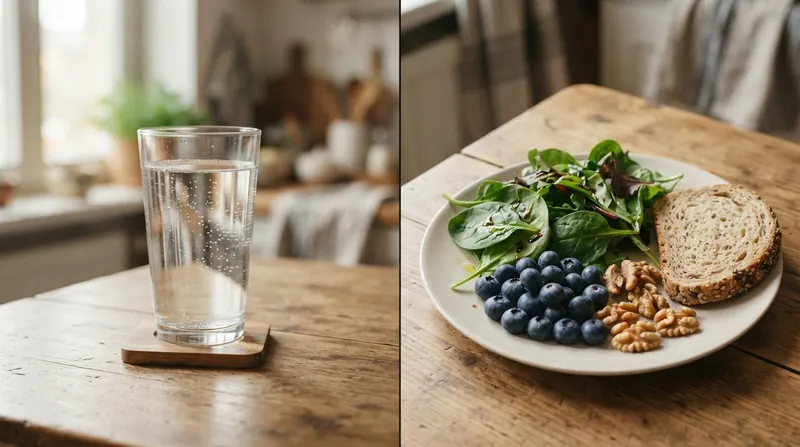
Plain water. In 1,111 adults aged 60 to 89, the third who were measurably short of fluid did worse over time on a test of how quickly they processed information. [7]
A review of 18 studies of adults over 60 found similar signals linking too little fluid to poorer scores on thinking tests. [8]
A glass of water with the morning chew, or instead of it, is the cheapest entry on this page.
I keep a glass next to the ledger now, and I finish it before I finish the coffee.
The plate. In a three-year trial of 604 older adults, people who ate a MIND-style diet and people who simply ate a little less both improved their thinking scores, by about the same amount. [9]
And in a large Brazilian study of 10,775 adults, those who ate the most ultra-processed food slipped somewhat faster on thinking tests over about eight years. [10]
The evening glass. In British civil servants followed for thirty years, heavier drinking went with shrinkage of the hippocampus and slower word-finding, and light drinking showed no advantage over none. [11]
Less in the glass is an entry with a long study behind it, and it saves money besides.
The walk. You don't need a study to tell you a walk with the dog does you good.
But I'll say it anyway: it's the line I'd least want to give up.
The cheapest entries in the book have the longest studies behind them.
None of those replaces the chew, and the chew doesn't replace any of them.
They're simply different lines, and a good book has room for all of them.
The Whole Entry, on One Index Card
If I had to fit this whole entry on one card for the fellow in the booth, here's what I'd write.
- Debit: about $1.33 a day at list price, plus $12.99 shipping on a single pouch, or pick it up in a store.
- Debit: 2 grams of added sugar and 20 calories every morning.
- Credit: coffee fruit at exactly its study's amount, in a two-hour blood study of ten people per group. [2]
- Credit: beet powder at a fraction of its study's day of food and juice, measured on a scan. [3]
- Credit: resveratrol at three quarters of its study's amount, and that study found better word recall over 26 weeks. [4]
- Margin: the chew itself has never been tested, and the fruit on the front is flavoring.
- Margin: pharmacist first if you take anything daily for the heart and circulation or anything that affects clotting.
- Date: thirty days from the order date to return it, used or unused, minus shipping.
Thirty soft chews, entered in the book at $1.33 a morning
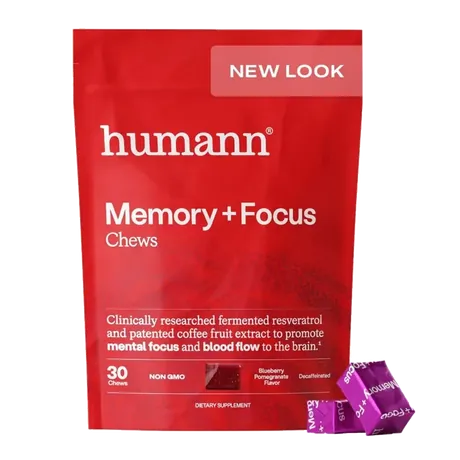
One soft blueberry-pomegranate chew a day of beet powder, a grape polyphenol and coffee fruit, made for a Texas company and sold by GNC.
CHECK AVAILABILITYSold by GNC Holdings, LLC, Pittsburgh, Pennsylvania · made for HumanN, Austin, Texas · thirty blueberry-pomegranate soft chews, one a day · returnable within 30 days of the order date, used or unused, minus shipping
Questions from the booth
Is this a medicine?
No. It's a dietary supplement in the form of a soft chew, and it isn't meant for any health condition.
Do I need water with it?
No. You chew it and swallow it.
How many a day?
One chew daily, by the label.
Does it have caffeine?
The front prints "Decaffeinated" for the coffee fruit, and the panel gives no caffeine figure. Keep your coffee as usual.
Is the blueberry an ingredient?
No. Blueberry and pomegranate are the flavor.
How much sugar is in it?
Two grams of added sugar and 20 calories per chew.
Which line has a memory study?
The resveratrol. Its study used 200 milligrams a day for 26 weeks, and the chew holds 150. [4]
Will the beet turn anything red?
It can turn urine or stool pink or red for a day, harmlessly.
When does the return window close?
Thirty days after the order date, not the delivery date.
Should I talk to anyone first?
Your pharmacist, if you take anything daily for the heart and circulation or anything that affects clotting.
Closing the Book on a Saturday
I finished this entry on a Saturday at the end of September, with the coffee going cold beside the book.
The diner was still an hour off, and the dog was already by the door.

Here's where the entry landed.
The debit side is clear, known and modest: about forty dollars, a little sugar, a minute a day.
The credit side is honest but early.
Three weighed ingredients, each with a study, one of them a real memory study at a higher amount in a narrower group.
Do the two columns balance? On paper, not yet.
The one number that would balance them is how the chew fits your own mornings, and only a month of your own notes can fill that in.
That's not a bad place for an entry to be.
It means the question is small, the cost of asking it is known, and the return window gives you a way out.
If you can say what it's for, it can go in the book. Just write down what you paid for it.
When I brought my notes back to the booth, my friend listened to the whole thing.
Then he said, "So it's forty dollars to find out," and I said that was about right.
If you decide to try a pouch, you now know exactly what goes in each column, and the date to write next to it.
If you decide not to, the water, the walk and the plate are still on the ledger, and they cost less than any pouch.
Either way, I hope your Saturday booth is full this week.
And I hope the name you're reaching for arrives before the toast does.

Sold and shipped by GNC Holdings, LLC, Pittsburgh. The price and any promotion are set by the seller.
Every line of the panel, with its weight, the study behind it and what that study measured, is written out in the ingredient and advertising guide linked at the foot of this page.
The guide also lists the other ingredients that make up the chew and explains the two questions worth asking your pharmacist.